
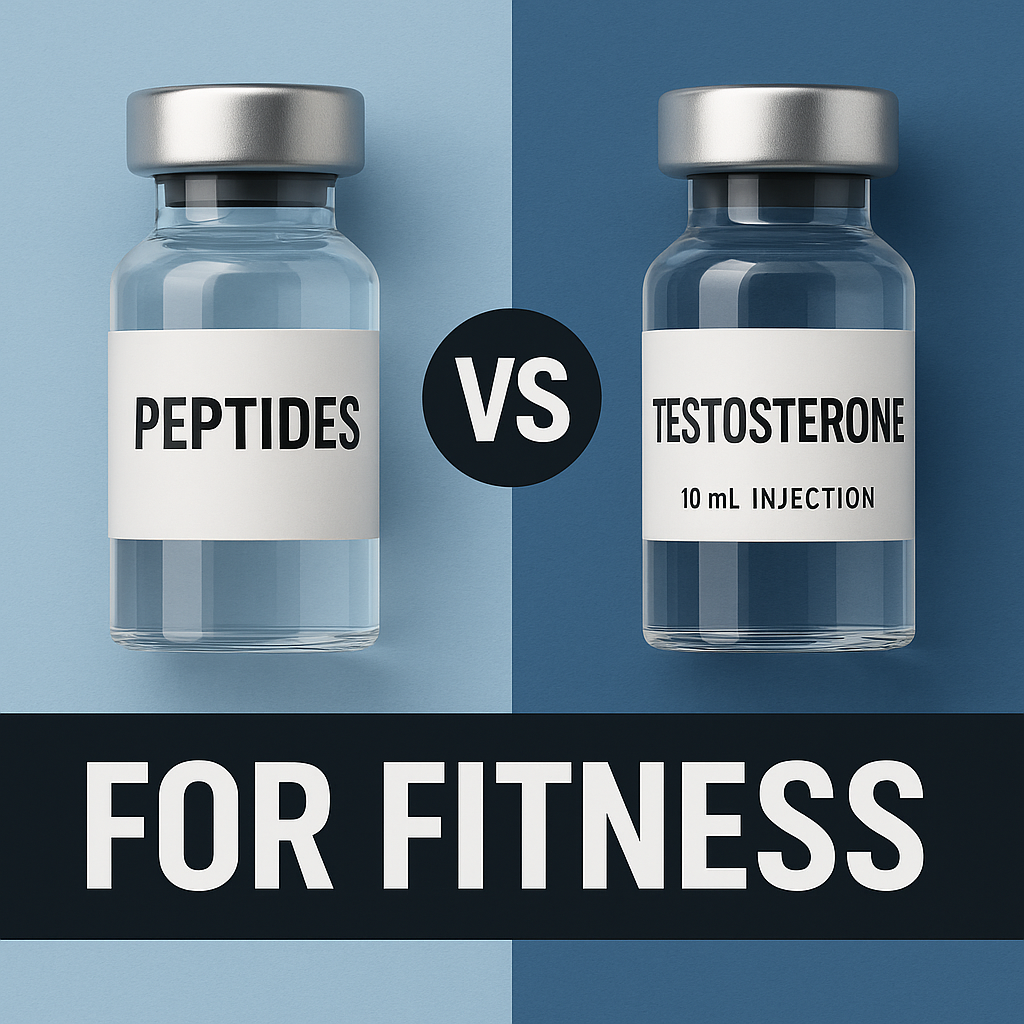
When it comes to optimizing performance, recovery, and overall health, fitness-minded men and women today are turning more and more to peptides and Testosterone Replacement Therapy (TRT). Both can be powerful tools—but they serve different purposes, and it’s important to understand where each fits in your personal fitness journey.
The Role of Peptides in Fitness
Peptides are short chains of amino acids that can trigger specific biological responses. In the fitness world, some of the most popular peptides are designed to:
- Stimulate growth hormone release (for better recovery, fat loss, and lean muscle gains).
- Support collagen production (for joint health and skin elasticity).
- Aid fat metabolism and endurance.
Some peptides are more effective than others. For example:
- BPC-157 is widely recognized for injury recovery and gut health.
- Ipamorelin or CJC-1295 can boost growth hormone levels, improving recovery and body composition.
- Thymosin Beta-4 (TB-500) is often used for tissue repair.
While these peptides can bring noticeable benefits, results vary by individual, and scientific data is still catching up to the hype. Many peptides remain experimental, and the quality of products on the market can differ drastically.
Downsides of Peptides
- Not all peptides are FDA-approved.
- Long-term safety data is limited.
- Black-market or unregulated sources can be risky.
- Results are often subtle compared to hormone replacement.
Why Testosterone Matters (Especially for Men Over 35)
After the age of 30–35, most men begin to see a natural decline in testosterone levels. Low testosterone can show up as:
- Fatigue and lower energy.
- Loss of muscle mass and strength.
- Increased body fat.
- Reduced libido.
- Slower recovery.
That’s where TRT comes in. Unlike peptides, testosterone replacement addresses a core hormone that drives muscle growth, recovery, and overall vitality.
Statistics highlight the growing interest:
- 40% of men under 40 years old have expressed interest in Testosterone Replacement Therapy.
- Studies show testosterone levels have been declining globally for decades, making TRT a more common medical intervention.
Benefits of TRT
- Improved energy and mood.
- Lean muscle preservation and growth.
- Better fat metabolism.
- Enhanced libido and sexual health.
- Faster workout recovery.
Downsides of TRT
- Requires consistent monitoring and blood work.
- Potential side effects if not managed properly (e.g., elevated red blood cell count, acne, hair loss).
- Long-term commitment—once you begin, natural production may remain suppressed.
The Bloodwork Factor
Before considering either peptides or TRT, bloodwork is non-negotiable. You need to know where your baseline levels are.
- Services like Quest Health make blood testing accessible and straightforward.
- Many TRT programs also include blood panels in their pricing—this can actually save you money compared to ordering panels separately.
A qualified doctor can then use your results to tailor the right plan—whether that’s TRT, peptides, or a combination.
What’s Next for GymWorkGame Readers
We believe in being fully transparent: TRT isn’t for everyone, and peptides aren’t a magic bullet. Both have pros and cons, but when paired with proper medical oversight, they can be part of a smart performance and health strategy.
That’s why we’re excited to announce that we’ll soon be partnering with licensed TRT providers offering:
- Online virtual consultations.
- In-person visits for those who prefer face-to-face guidance.
This means you’ll have safe, legal, and personalized access to the therapies that align with your goals.
Final Takeaway
- Peptides: Great for recovery, joint health, and fat metabolism, but results are often subtle, and quality control is key.
- TRT: A cornerstone for men over 35 with clinically low testosterone—when guided by bloodwork and a doctor, it can transform energy, recovery, and body composition.
- Bloodwork first, therapy second: Always start by knowing your numbers.
Your health isn’t one-size-fits-all. If you’re serious about performance and longevity, the smartest move is to get your labs done, review them with a professional, and explore the path that works for your body.