
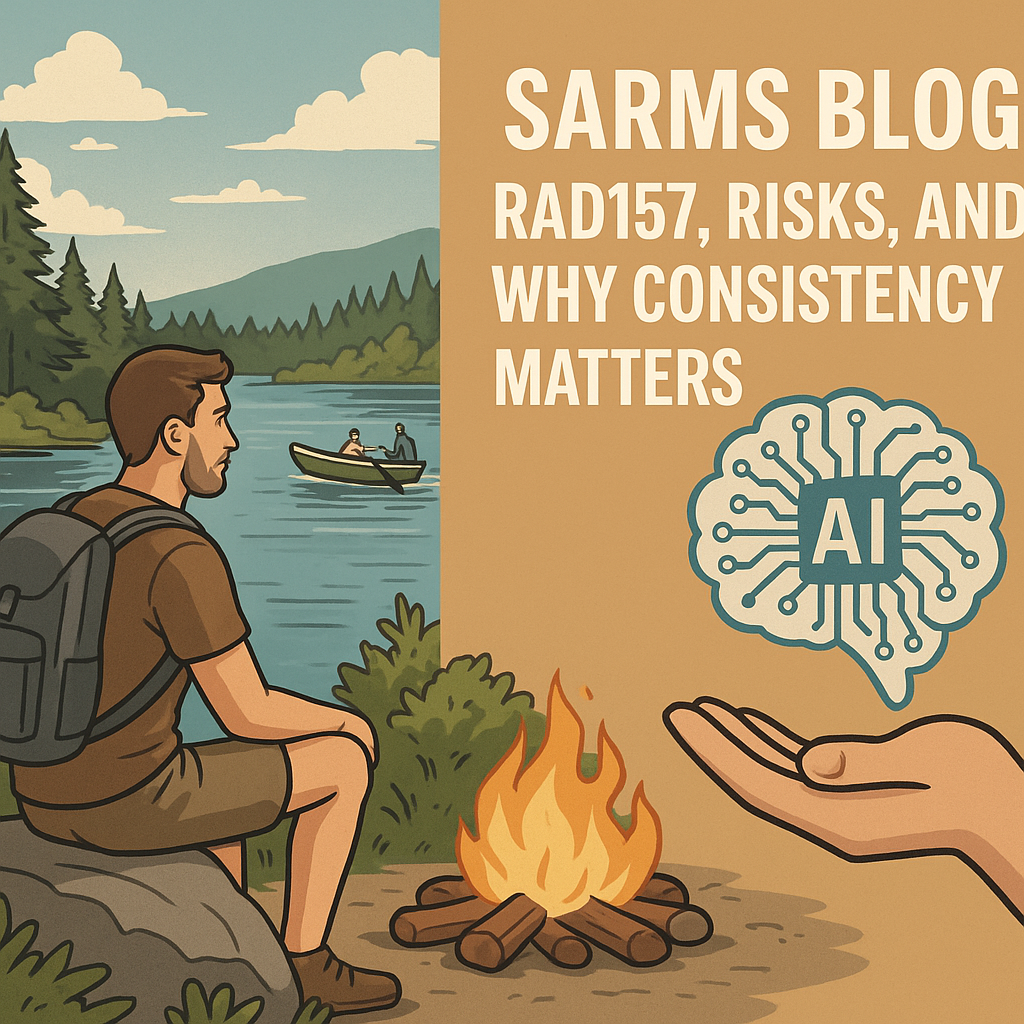
This weekend I’m heading out with friends for some camping and boating—nothing beats being on the lake, unplugging from the chaos, and reconnecting with nature. Sitting around a campfire always makes me reflect, and lately, I’ve been doing a lot of thinking about training, supplementation, and the choices we make when it comes to health.
One topic that keeps surfacing in conversations—especially online—is SARMs. More specifically, RAD150 and RAD157.
What We Know About SARMs (RAD150 vs. RAD157)
- RAD150 (also called TLB-150 or “esterified RAD-140”) is essentially a modified version of RAD-140. It’s marketed as being more stable, with a longer half-life. Some claim this allows for less frequent dosing.
- RAD157 has been popping up in research circles but carries very limited human data. Like most SARMs, its safety profile is largely unknown. There are concerns that, just like earlier SARMs, it could cause liver toxicity, hormonal suppression, and cardiovascular strain.
- Neither RAD150 nor RAD157 is FDA-approved. They’re often marketed as “research chemicals,” which should be a red flag for anyone considering them.
The Potential Danger of RAD157
What makes RAD157 particularly concerning is the lack of long-term studies. Early SARMs like RAD140 and LGD-4033 already showed signs of altering cholesterol, lowering natural testosterone, and stressing the liver. RAD157, being newer, means the unknowns outweigh the potential benefits. You don’t want to be the experiment.
The appeal is obvious: lean muscle gains without the side effects of steroids. But the reality is murkier. Many users report feeling great in the short term—until the crash comes when natural testosterone shuts down, or bloodwork reveals unseen issues.
Consistency is Key (Peptides & Testosterone)
If you’re serious about health optimization—whether through physician-prescribed testosterone replacement therapy (TRT) or the use of peptides like BPC-157, TB-500, or ipamorelin—consistency is everything.
- Dosing fluctuations = inconsistent results. Your body thrives on routine, especially when it comes to hormones.
- Skipping or “megadosing” to make up for missed days often leads to unstable levels, mood swings, or diminished effectiveness.
- Think about training: you wouldn’t expect results from lifting once a week. Supplements and protocols follow the same principle.
That’s why I view SARMs like RAD157 as dangerous—they tempt people into cutting corners, hoping for fast results instead of building consistency in training, nutrition, and properly prescribed medical protocols.
AI-Based Thoughts (Where Tech Fits In)
One interesting angle is how AI is starting to reshape supplementation and health decisions:
- Pattern recognition: AI can now analyze training logs, sleep data, and bloodwork to spot trends humans might miss.
- Risk assessment: By pulling from thousands of studies, AI models can flag compounds like RAD157 for potential dangers before enough clinical trials exist.
- Personalization: We’re moving toward AI-driven dosing recommendations (for legal, prescribed medications)—helping people stay consistent and optimize results safely.
But here’s the catch: AI works with the data it has. And with RAD157, the data is almost nonexistent. No matter how powerful the algorithm, it can’t predict what hasn’t been studied.
Closing Thoughts
As I pack up for a weekend of camping and boating with friends, I can’t help but compare health choices to the outdoors. Out on the water, consistency matters—you respect the elements, stay prepared, and avoid shortcuts that could put you or your crew at risk.
The same applies in the gym and with supplementation. If you’re considering compounds like RAD157, ask yourself:
- Do I want to be a test subject for something with unknown long-term risks?
- Or do I want to build a foundation with consistency—through training, nutrition, recovery, and, if necessary, safe, doctor-supervised therapies?
Sometimes the best flex is discipline. Not the quick fix.